
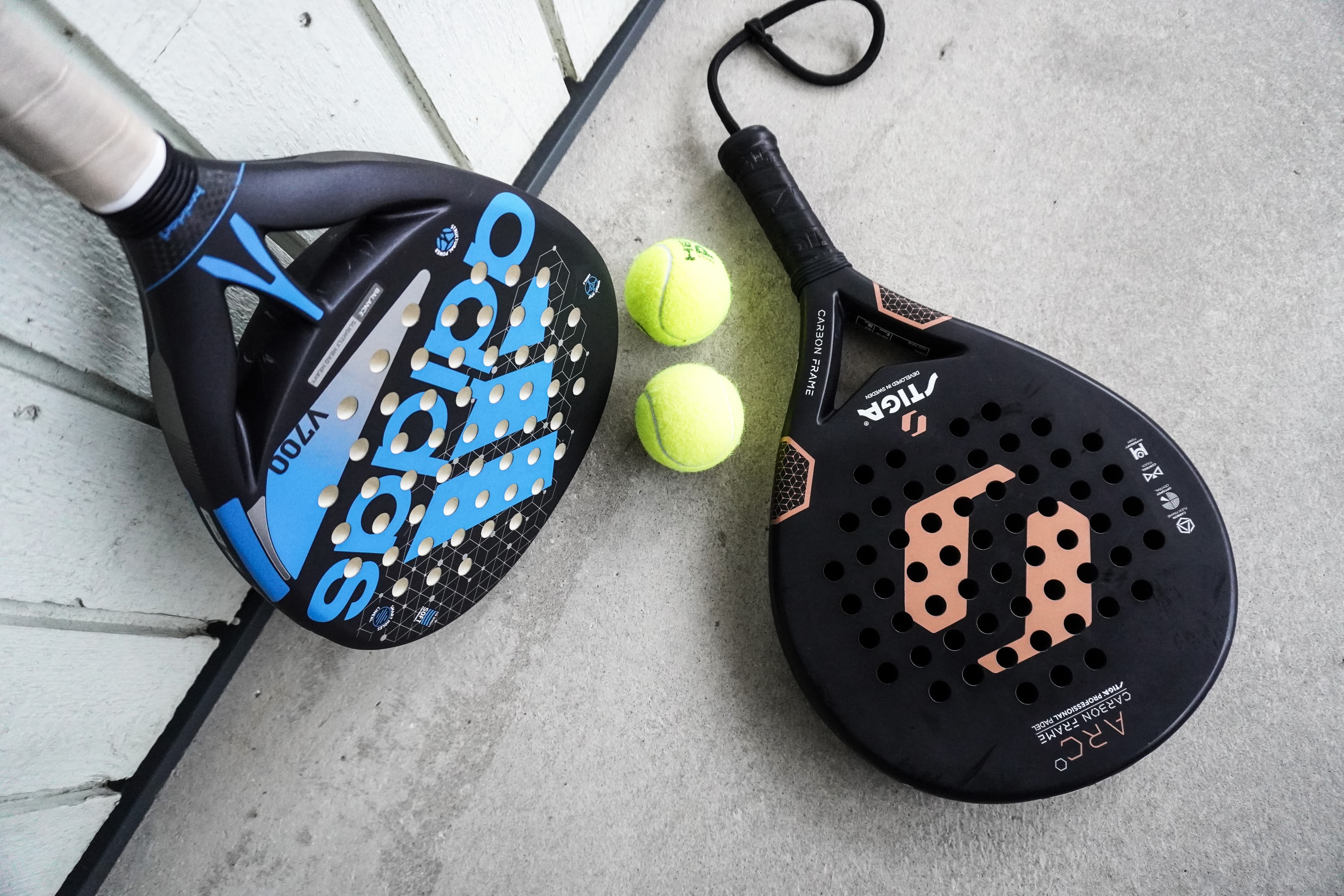
How to Choose the Right Padel Racket in 2026
With hundreds of padel rackets on the market, choosing the right one can feel overwhelming. Our expert guide breaks down everything you need to know.
Understanding Padel Racket Shapes
The most important decision when buying a padel racket is choosing the right shape. There are three main shapes: round, teardrop, and diamond. Round rackets have a larger sweet spot and are more forgiving — ideal for beginners and intermediate players. Diamond-shaped rackets are harder to control but generate enormous power — favoured by advanced players with precise technique. Teardrop shapes offer a balance between control and power, making them the most popular choice for club players of all levels.
The sweet spot location is what distinguishes these shapes in practice. A round racket has its sweet spot low in the frame, near the centre of the hitting area. You can make contact slightly off-centre and still generate a playable shot. A diamond racket concentrates the sweet spot at the top of the frame — where maximum power is generated — but missing the sweet spot by even a centimetre results in a noticeably weaker or misdirected shot. If you're still developing your technique, the round frame will give you more confidence and consistency.
Materials and Construction
Modern padel rackets are made from combinations of fibreglass, carbon fibre, and EVA or FOAM rubber cores. Fibreglass faces are more flexible and forgiving, while carbon fibre offers precision and responsiveness. The core material significantly affects the feel: soft EVA foam provides a more comfortable, arm-friendly experience, while harder foam generates more direct power feedback. High-end rackets from brands like Bullpadel, Head, and Babolat use premium carbon layups and memory rubber cores for the optimal combination of performance and feel.
Frame Material
Full carbon fibre frames are the stiffest and most responsive. They transmit more vibration through the handle on off-centre hits, which can contribute to arm fatigue or injury over time if your technique is imperfect. Carbon/fibreglass hybrid frames are more forgiving and are a better choice for players who play more than three times a week. Full fibreglass frames are rare at the premium end but common in entry-level rackets — they absorb vibration well and are very arm-friendly.
Core Material
EVA rubber cores range from soft to hard. Soft EVA is comfortable, absorbs shock well, and gives good touch for net play. Hard EVA generates more pace and a firmer feel — preferred by advanced players who want immediate feedback on every shot. Foam (polyurethane) cores sit between soft and hard EVA in terms of feel and are common in mid-range rackets. High-density foam with memory properties is used in premium models to maintain consistent performance over thousands of hours of play.

Weight and Balance
Padel rackets typically weigh between 340g and 395g without overgrip. Lighter rackets (340–355g) are easier to manoeuvre and generate less arm fatigue — better for defensive players and those with shoulder issues. Heavier rackets (370–395g) generate more mass through the ball at contact, which translates to more pace on attacking volleys and smashes.
Balance point is equally important. A low balance (weight concentrated toward the handle) gives better manoeuvrability and control. A high balance (weight toward the head) increases power but slows down your reaction time at the net. Most intermediate players do best with a medium balance — around 260–270mm from the butt of the handle.
Racket Recommendations by Playing Level
- Beginners (€50–120): Round shape, fibreglass face, soft EVA core. Look for a medium balance point and a comfortable grip size. The Bullpadel Vertex 04 Control (around €80) is an outstanding choice — comfortable, durable, and available in most Marbella pro shops.
- Intermediate (€100–200): Teardrop shape, carbon/fibreglass hybrid face. Intermediate players will love the Head Zephyr, which offers exceptional touch and a large sweet spot at a very competitive price. The Babolat Air Viper is another strong choice in this category.
- Advanced (€180–400+): Diamond or teardrop, full carbon face, hard or medium-hard EVA. Advanced players should consider the Babolat Technical Viper, a precision instrument used by several World Tour professionals. The Bullpadel Hack 03 is a top choice for players who prioritise power from the net.
Grip Size and Overgrip
Most padel rackets come with one standard grip size. If the grip feels too small (common for players with larger hands), add one or two layers of overgrip. If it feels too large, it is harder to fix — check before buying. A grip that is too large reduces wrist flexibility, which limits your ability to generate spin. A grip that is too small can cause excessive wrist movement, leading to inconsistency on volleys.
Replace your overgrip every 6–10 hours of play. A worn overgrip becomes slippery with sweat, which leads to grip tightening (a common cause of arm injuries) and reduced control. Overgrips cost around €3–5 for a pack of three and are available at every pro shop in Marbella.
Where to Buy in Marbella
The best selection of padel rackets in Marbella can be found at the pro shops of NAC Nueva Alcántara, Manolo Santana Racquets Club, and Puente Romano. NAC's Adidas pro shop carries the full Adidas padel range alongside selected Bullpadel and Head models. Manolo Santana's shop is particularly well-stocked for mid-range and premium rackets.
All three clubs offer demo programmes where you can test a racket for one session before committing to a purchase. We strongly recommend taking advantage of this service before spending significant money — a racket that feels perfect on a slow indoor court can feel completely different on a fast outdoor panoramic court in summer heat.

Caring for Your Racket
Padel rackets are more delicate than they look. Avoid hitting the ground or glass walls with the frame — even a minor impact on the frame edge can create a crack that propagates through the carbon over several sessions. Store your racket in a protective case and keep it away from extreme heat (such as a car boot in a Marbella summer). Temperatures above 50°C can delaminate the carbon face and deform the EVA core. A good protective tape around the frame's edge is a worthwhile investment that can extend your racket's life considerably.
If you notice a dead spot on the face — an area that produces a noticeably different sound and feel — the core may have taken a knock. This often happens at the top corner of the frame after a mis-hit smash. A dead spot cannot be repaired; the racket should be replaced when it begins affecting your game.
The Verdict
Choosing the right padel racket comes down to two things: your current playing level and your physical condition. Beginners should prioritise forgiveness over power. Intermediate players should focus on feel and balance. Advanced players can fine-tune for specific technical requirements. Whichever category you fall into, use the demo programmes at Marbella's best clubs before buying — and always size down rather than up on frame weight until you are playing enough to need the extra mass.
Ready to put your new racket to use? See our 10 tips to improve your padel game for tactical advice to go alongside your upgraded equipment.
Own a padel club in Marbella?
Get featured on the #1 Marbella padel guide. Reach thousands of players searching for courts every month.
List your club →